01
Tap the trees
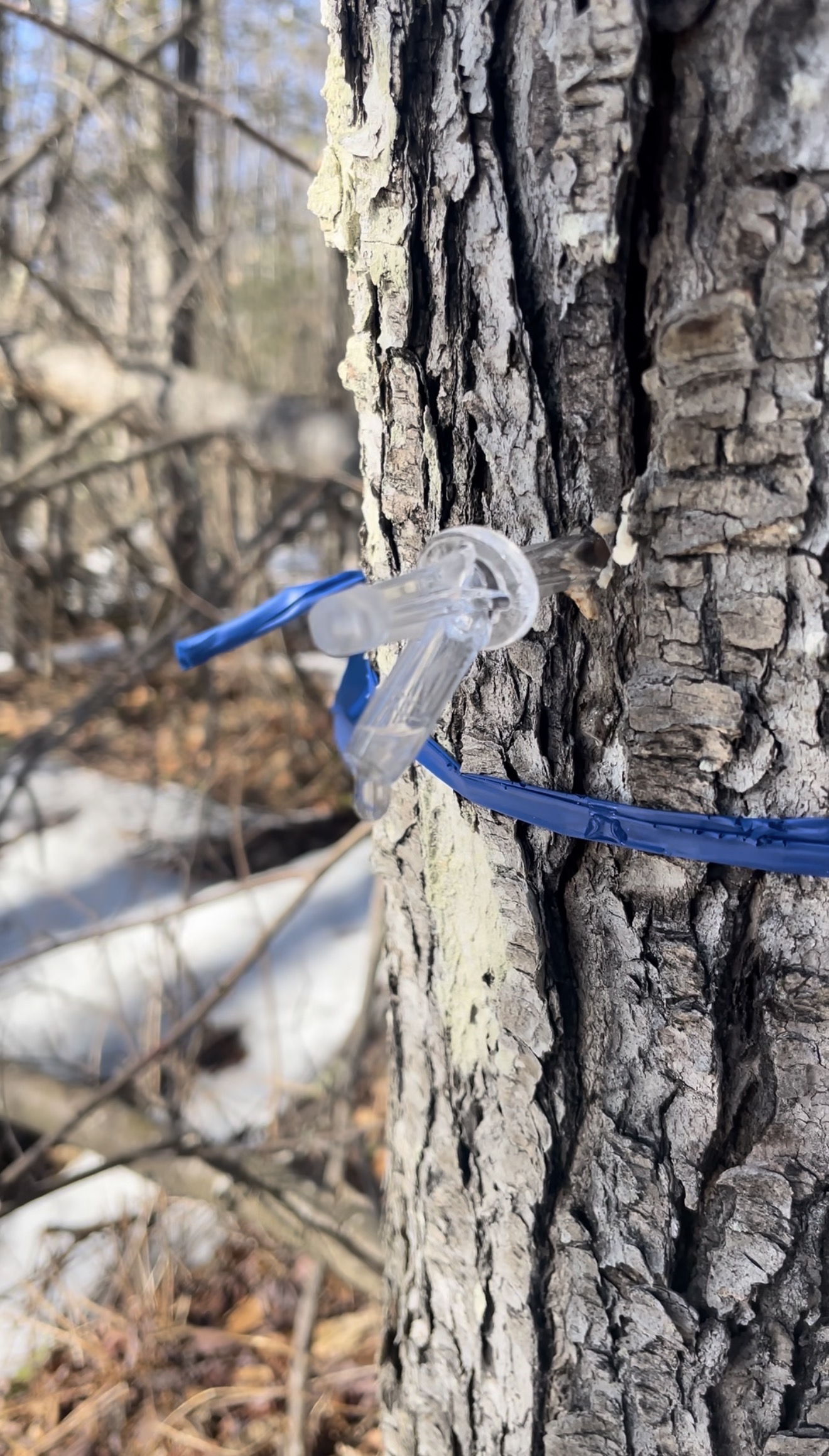
In early winter, we drill a small hole in each healthy maple and place a spout in it. Done properly, tapping does not hurt the tree. The spout connects directly to our sap tubing.

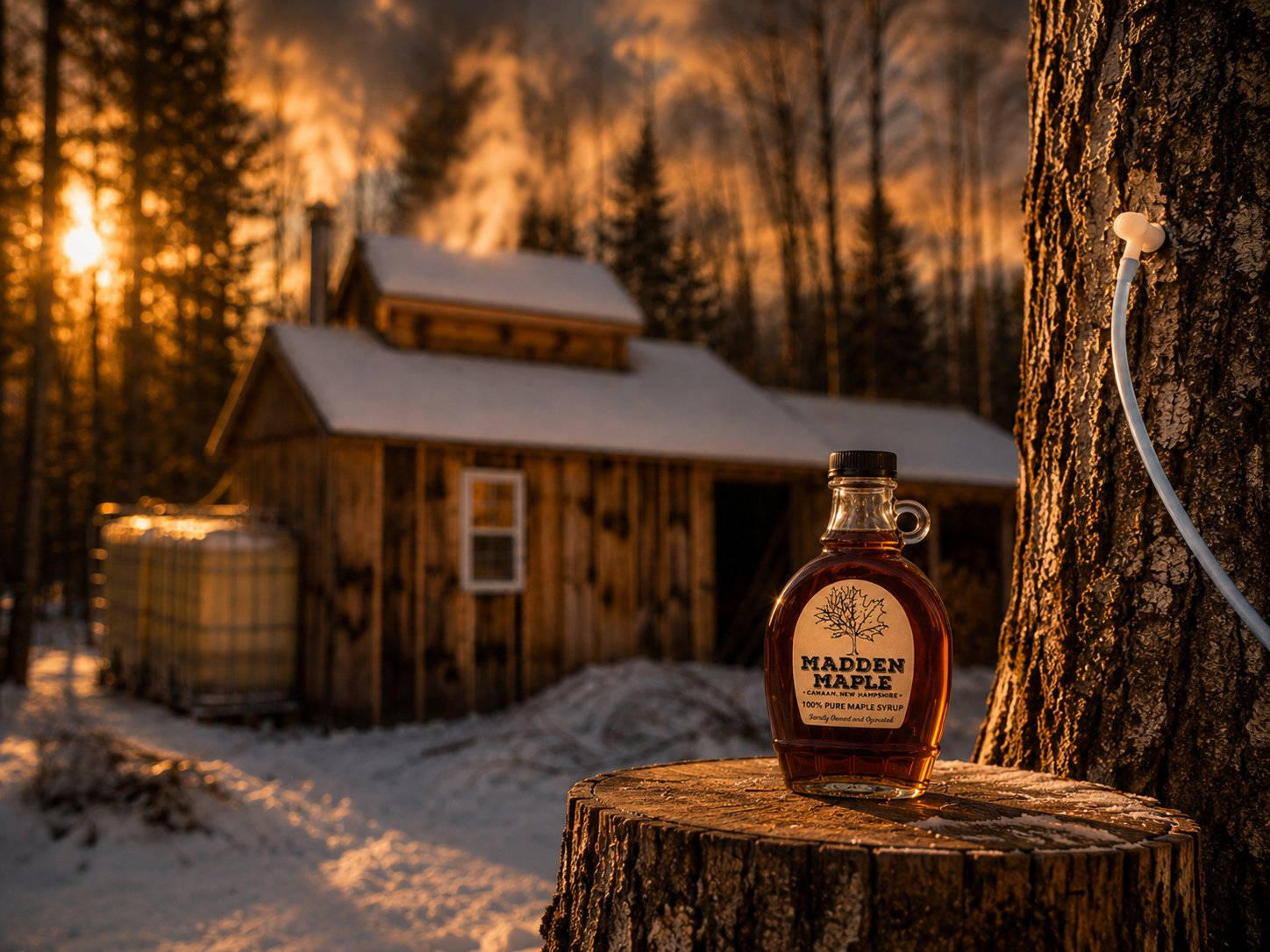
It begins with a tiny tap in a maple tree and ends with a warm bottle at the sugarhouse. Follow one season of work in the Canaan woods.
Start in the woods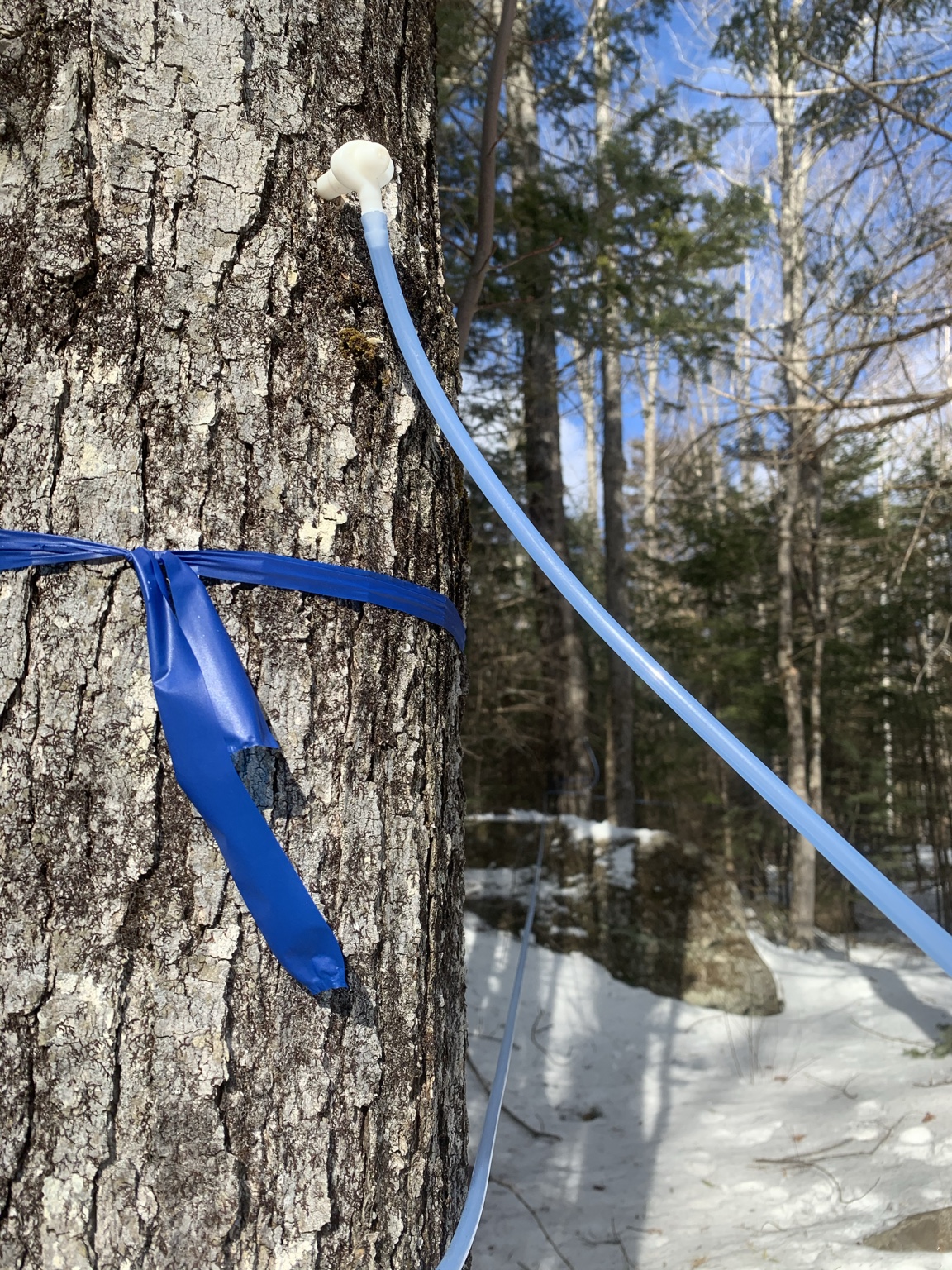
Cold nights and warm days turn the Canaan woods into a natural collection system.
In early winter, we drill a small hole in each healthy maple and place a spout in it. Done properly, tapping does not hurt the tree. The spout connects directly to our sap tubing.
In spring, freezing nights followed by sunny, warmer days create pressure inside the tree. That pressure pushes sap through the tap hole, into the spout, and on to the tubing.
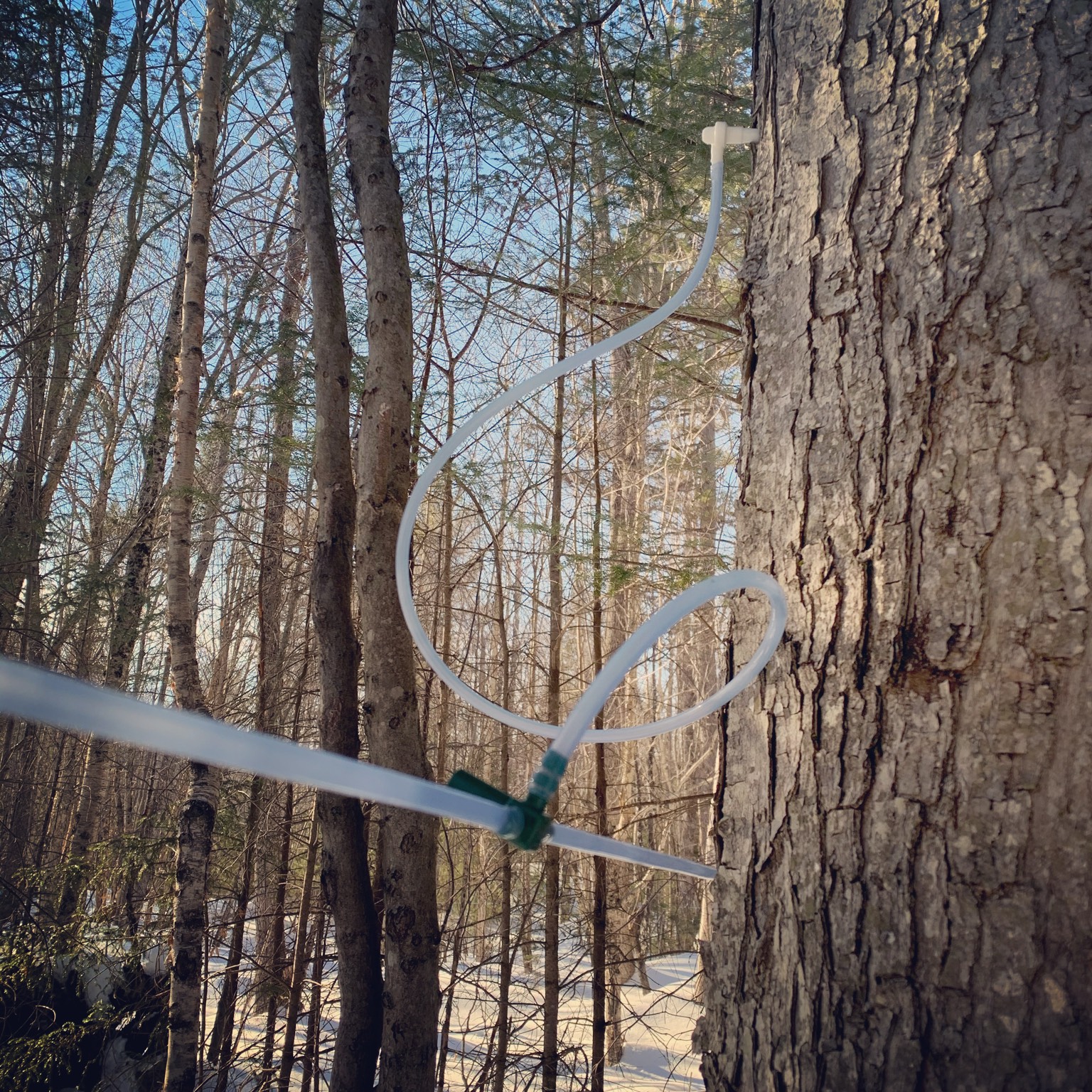
A connected network of tubing carries sap downhill and across the sugarbush toward our remote pump station.
At the remote station, a vacuum pump pulls through the tubing system to help us collect sap efficiently while the trees are running. The entire pump station is powered 100% by solar energy.
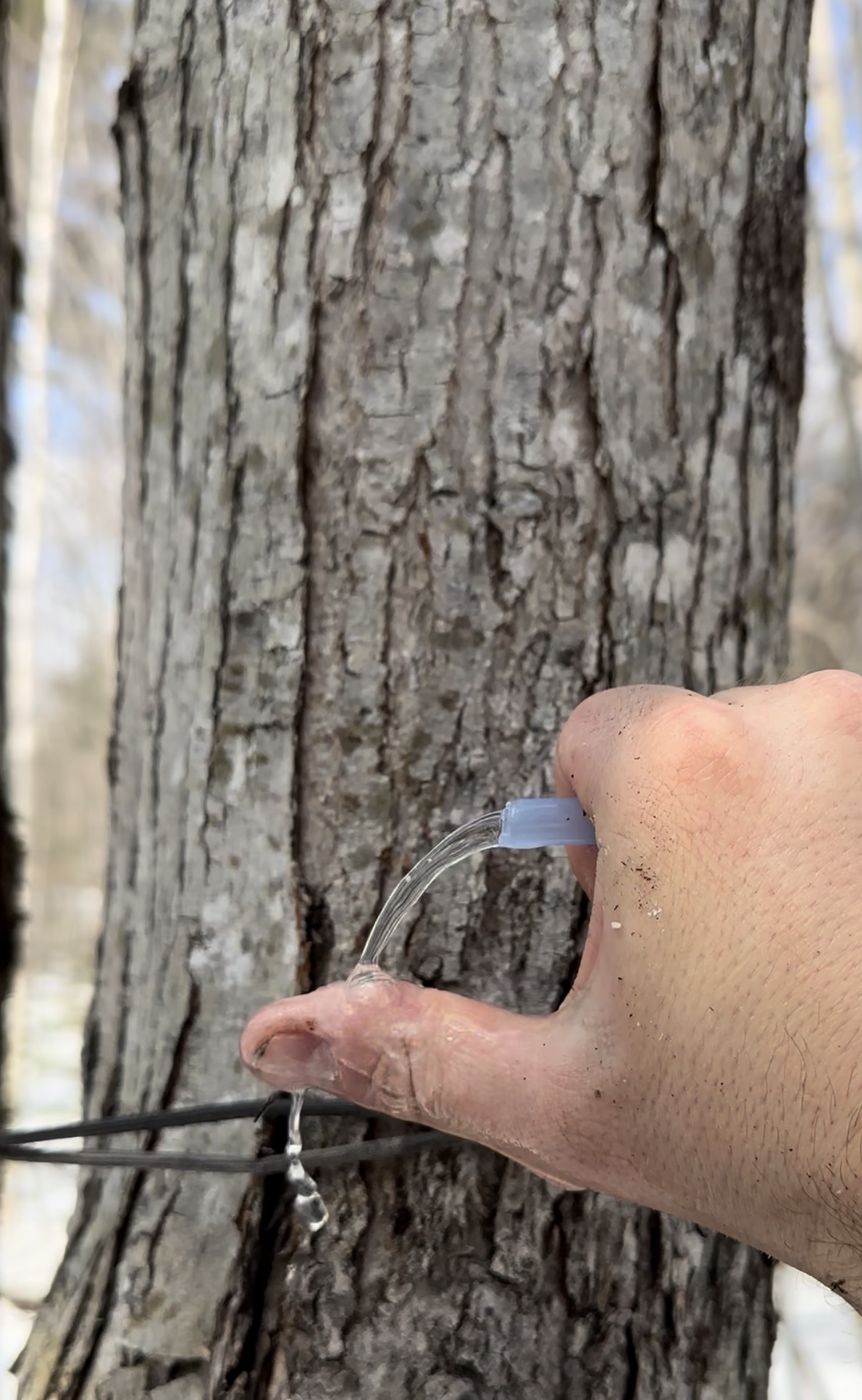
Fresh sap looks almost like water. At this point, only a small portion of it is sugar.
Sap gathers in a 300-gallon tank at the remote station. Fresh maple sap typically contains between 2% and 5% sugar.
When the remote tank is full, a pump sends the sap through a large-diameter pipe to storage tanks at the sugarhouse.
From sugarhouse storage, gravity steadily feeds the sap into the evaporator so the level in the pans remains consistent.
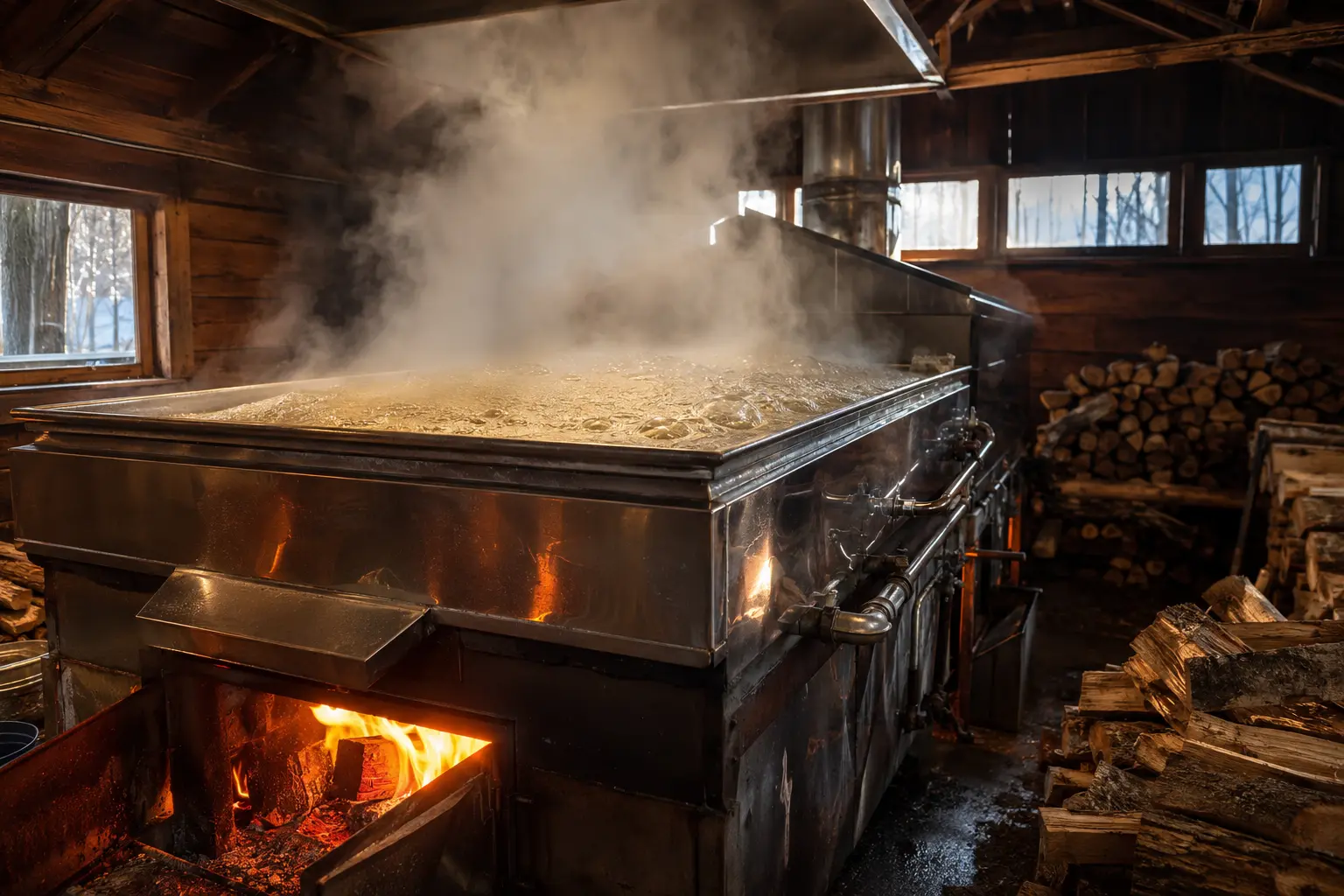
Our evaporator is wood-fired. During a boil, the fire must be fed every three to five minutes to maintain the intense heat and rapid boil.
The evaporator concentrates the sap until it reaches the precise density of pure maple syrup.
As water boils away, the liquid becomes denser. That difference in density moves the increasingly concentrated syrup through channels in the evaporator pans.
At the end of the pan, a probe monitors temperature. Syrup is ready at exactly 7°F above the current boiling point of water—between 66% and 68% sugar.
At the finish point, a controller opens a valve and draws off 100% pure maple syrup. The valve closes when the temperature falls below the 7-degree mark.
Hot syrup is filtered to remove larger particles of minerals and other natural material created during the boiling process.
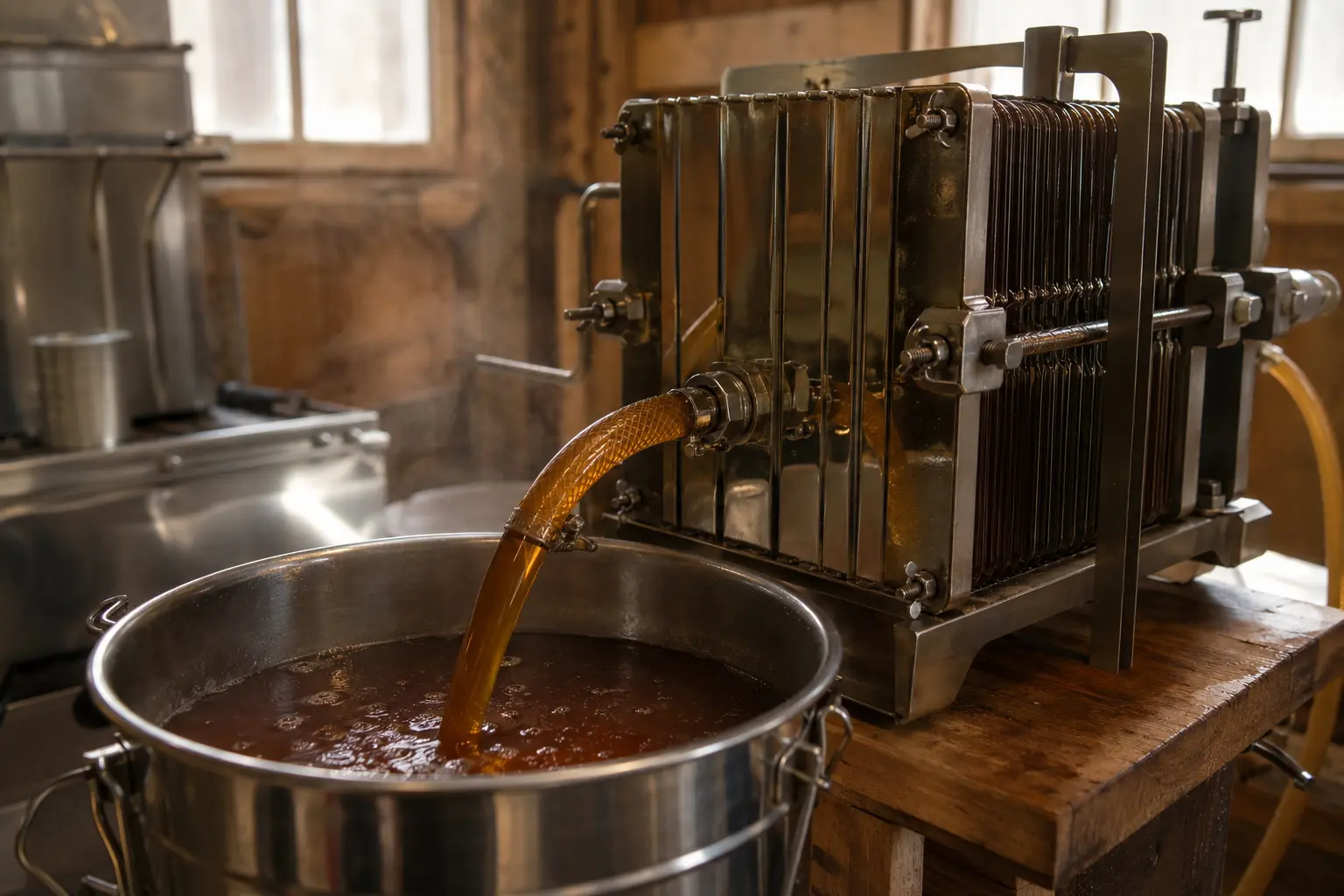
Every batch is checked, classified, and hot-packed before the woods and equipment are prepared for another year.
Filtered syrup moves to our finisher and bottler, where it is held between 180°F and 190°F for hot packing.
We draw a small sample into a vial and use an instrument to measure how much light passes through it. That reading gives us an accurate maple syrup color grade.
The finished syrup is drawn into bottles and sealed—ready to enjoy on pancakes, in coffee, while baking, or on any favorite food.
After sugar season, we clean every piece of equipment and pull the spouts from the trees. Then firewood collection begins for next season’s boils.
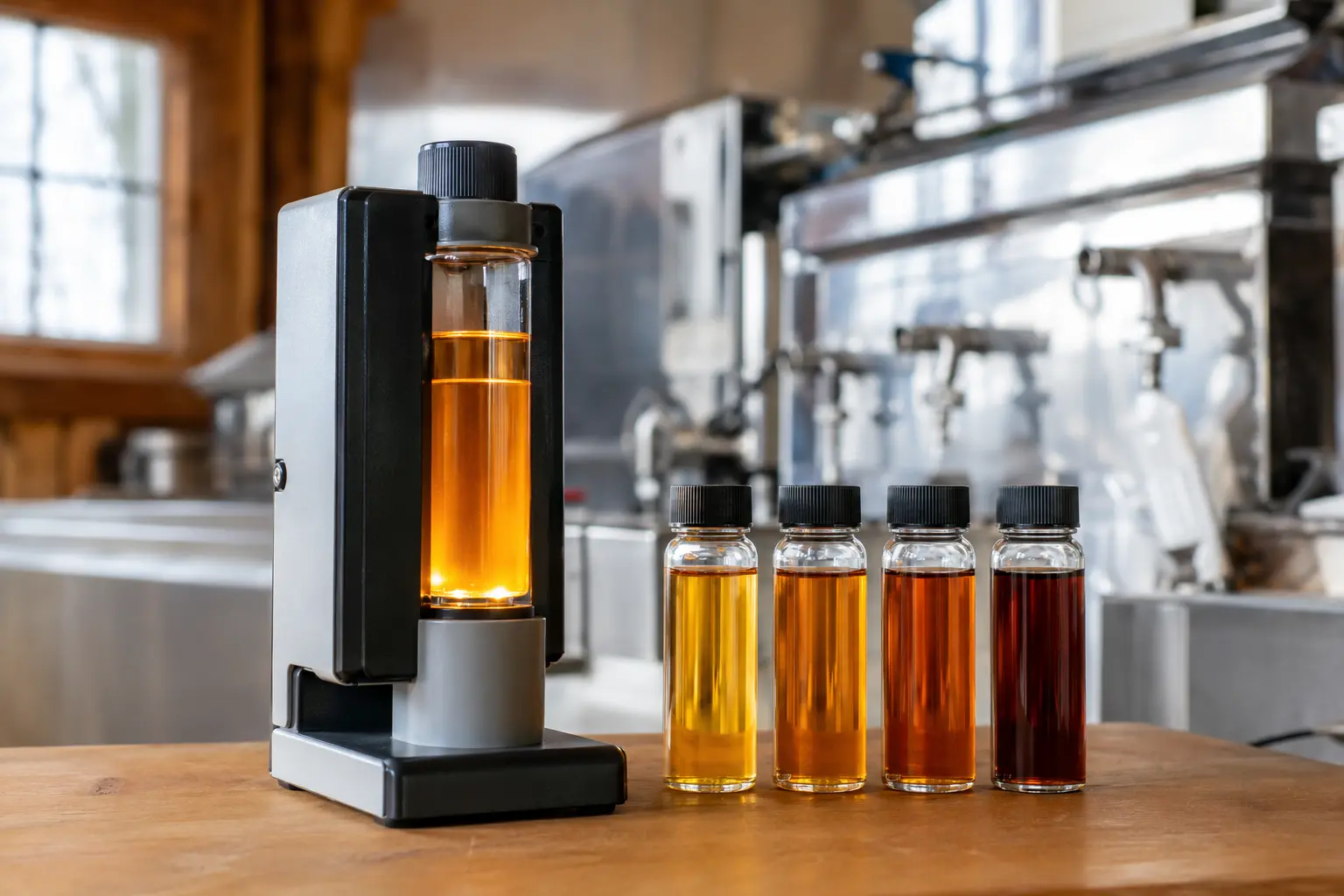
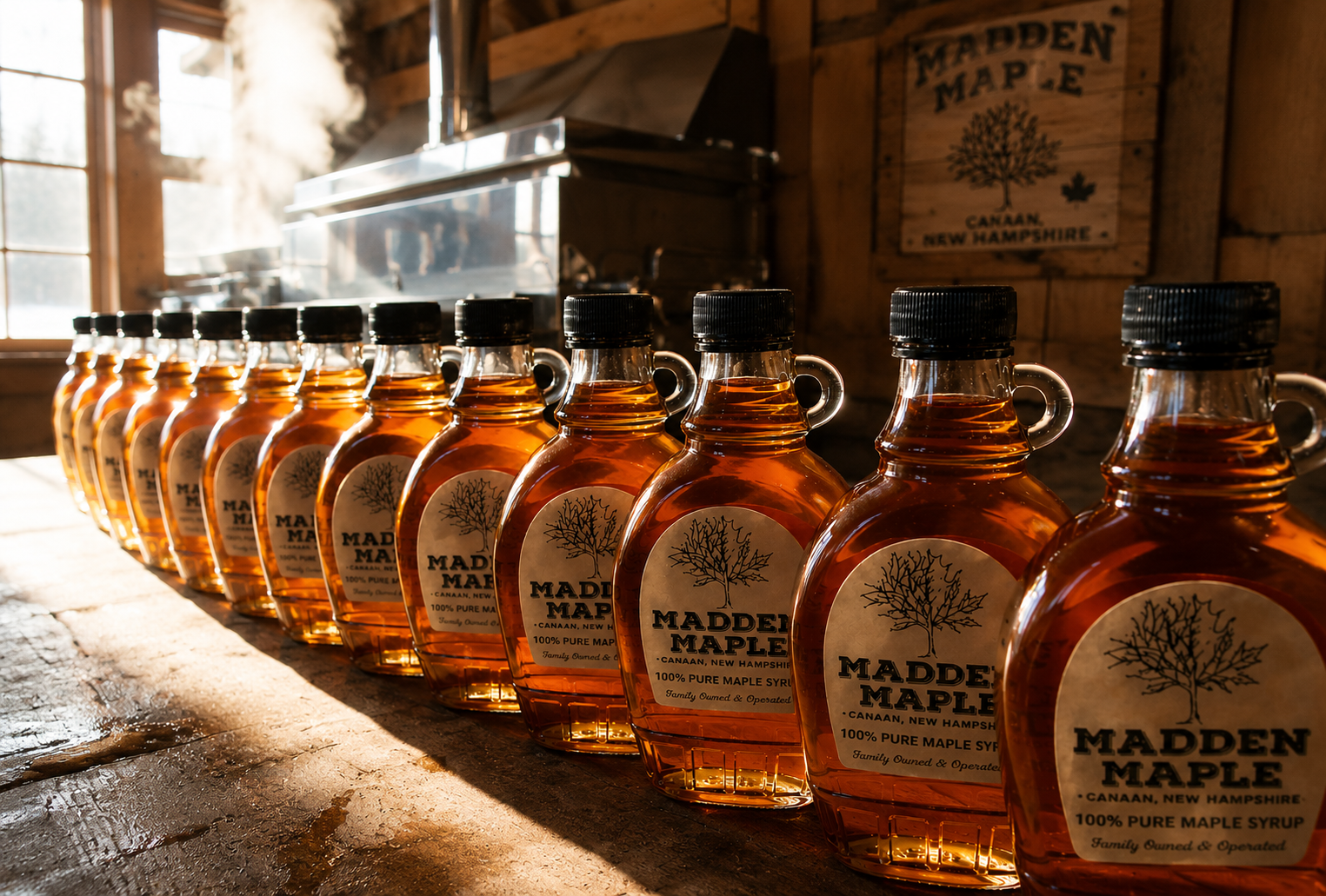
Pure maple syrup. One ingredient. A whole season of family work.